
How much does it cost to charge an EV in Australia? (2026)
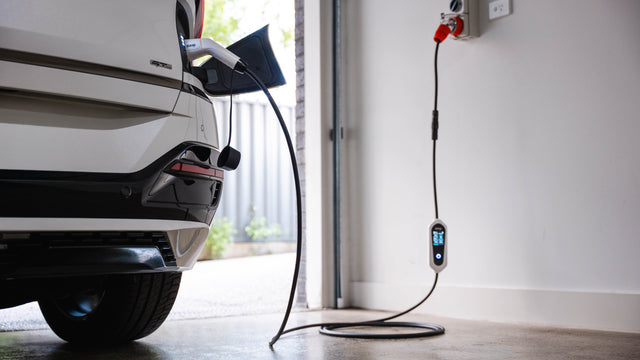
Petrol pushing $2.50/L for the cheap stuff, diesel north of $3.50/L… Ouch!
Without rubbing salt any further into the wound - we’ll leave that one there.
So what’s it actually costing to charge an EV in Australia?
Before we get into it, it’s worth calling out what this is - and what it isn’t.
This is a straight comparison of energy costs. We’re looking purely at what it costs to 'fill up' - whether that’s electricity or petrol. We’re not factoring in purchase price, tax incentives, insurance, servicing, or any of the other variables that come with owning a car. That’s a much bigger conversation.
Even when you narrow it down to energy, there’s still a fair bit of variability. Battery sizes typically range from 60-90kWh. Petrol tanks usually sit somewhere between 55-100 litres. City driving delivers different results to highway driving. Petrol prices move constantly, and electricity pricing can vary depending on your plan, time of day, and whether you’re charging at home or out in public.
So to keep things simple, initially, we’re going to anchor everything to a consistent set of assumptions:
- EV battery: 70kWh
- Petrol tank: 60L
- Range: 450km per full charge/tank
- Petrol price: $1.80/L
- Home electricity: $0.26/kWh (peak) and $0.08/kWh (off-peak EV plan)
- Public AC charging: $0.45/kWh
- Fast DC charging: $0.70/kWh
With that locked in, we can compare things properly.
A full charge on a 70kWh EV lands roughly at $18 at home on a standard rate, or closer to $6 if you’re charging off-peak on an EV plan - such as AGL’s Night Saver EV Plan. If you’re out and about, that same 'full tank' equivalent might cost around $30 on a public AC charger, or $50 on a fast DC charger.
For comparison, a typical petrol vehicle with a 60L tank at $1.80/L is going to cost about $110 to fill up.
Now, in reality, most EV drivers aren’t regularly charging from 0 to 100%. At home, it’s usually smaller, more frequent top-ups. On the road, it’s often a 20-80% charge while you grab a coffee or stretch the legs. But using a full charge vs full tank comparison keeps things clean - and the cost differences still hold.
If you break those numbers down further, the gap becomes even clearer. Based on the 450km range assumption for a full tank or charge, petrol lands at around $24 per 100km. Comparatively, EV charging at home off-peak drops to roughly $1-$2 per 100km (yup - that’s no typo), or about $4 per 100km on a standard home rate. Public AC charging sits around $6-$7 per 100km, while fast DC charging comes in closer to $11-$12 per 100km.
Here’s a simple reference to bring that together:
|
Energy Souce |
Cost Full Charge or Tank |
Cost per 100km |
|
Home (off-peak) |
~$6 |
~$1-$2 |
|
Home (standard) |
~$18 |
~$4 |
|
Public AC |
~$30 |
~$6-$7 |
|
Fast DC |
~$50 |
~$11-$12 |
|
Petrol |
~$110 |
~$24 |
To make this more tangible, let’s look at how it plays out across a few common segments and real vehicles currently on Aussie roads:
- Small Hatch: MG4 EV vs Mazda 3
- Mid-Size SUV: Kia EV5 vs Toyota RAV4
- Large SUV: Volvo EX90 vs Hyundai Santa Fe
MG4 EV vs Mazda 3
|
MG4 EV |
Mazda 3 |
|
|
Battery / tank |
51 kWh |
51L |
|
City range |
~400 km |
~650 km |
|
Highway range |
~320 km |
~750 km |
|
Full charge / tank cost |
~$10–$13 (home) / |
~$90 |
|
Cost per 100km |
~$3–$4 (home) / |
~$12-$14 |
Kia EV5 vs Toyota RAV4
|
Kia EV5 |
Toyota RAV4 |
|
|
Battery / tank |
64 kWh |
55L |
|
City range |
~500 km |
~700 km |
|
Highway range |
~400 km |
~800 km |
|
Full charge / tank cost |
~$12–$18 (home) / |
~$100 |
|
Cost per 100km |
~$3–$4 (home) / |
~$12-$14 |
Volvo EX90 vs Hyundai Santa Fe
|
Volvo EX90 |
Hyundai Santa Fe |
|
|
Battery / tank |
111 kWh |
67L |
|
City range |
~600 km |
~650 km |
|
Highway range |
~500 km |
~750 km |
|
Full charge / tank cost |
~$20–$35 (home) / |
~$120 |
|
Cost per 100km |
~$3–$6 (home) / |
~$16-$18 |
Across all three segments, the pattern holds. Charging at home is dramatically cheaper. Fast charging narrows the gap, but generally will still come in under petrol. When it comes to public fast charging, I tend to use the rule-of-thumb that charging costs approx. ⅔ the price of petrol to fill-up..
Where things get a bit more complicated is consistency and transparency.
With petrol, you pull into a servo and you’ve got a pretty good idea what you’re up for - the price is on the board and on the pump. With EV charging, that’s not always the case. Different networks charge different rates. Prices can vary by location. Chargers don’t display their pricing. So unless you’re across it (or even care), you often don’t know the exact cost until you’re in the app.
That’s where the fragmentation and friction comes into Australia’s public EV charging ecosystem. Not the cost itself - but the lack of visibility and clarity.
And that’s exactly where tools like zuup Roam start to matter. It’s not about making charging cheaper - it’s about making it simpler. Being able to find chargers, compare pricing and make a decision before you plug in changes the driver’s experience completely.
At the end of the day, charging an EV in Australia is, in most cases, significantly cheaper than running a petrol car.
It just takes a bit more awareness upfront.
Once you understand how it works - and have the right tools in your pocket - it becomes easy to stay in control of your costs.
And more often than not, you’ll still be well ahead of petrol.
Charge on, legends! ✌️